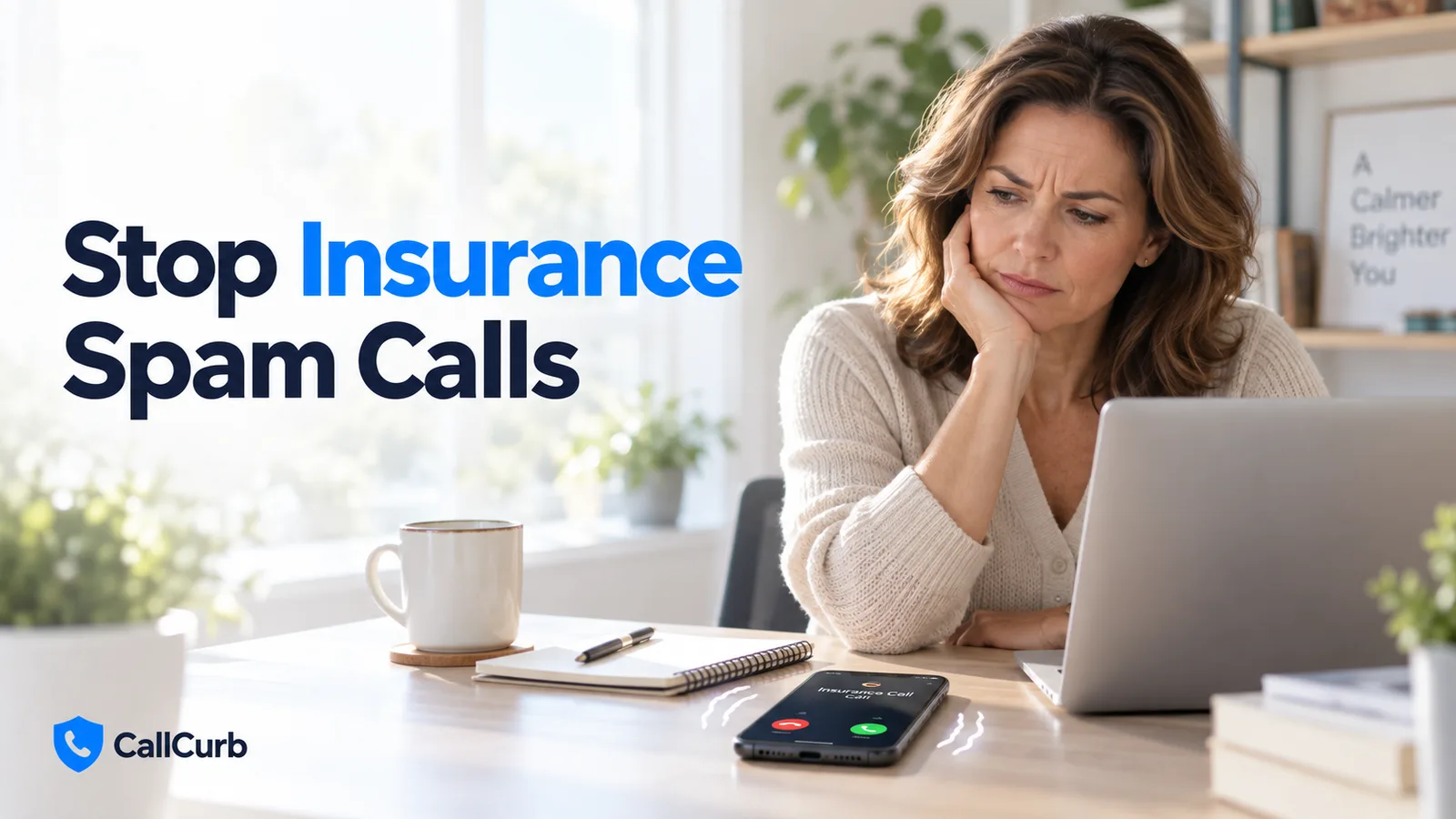
Your phone rings at dinner. Again. This time it's someone claiming to offer a "special Medicare plan" or a "discounted insurance quote." You silence it and go back to eating.
Five minutes later: another call from a different number.
If you're getting hammered with insurance spam calls, you're experiencing a real problem—not just an annoyance. Americans receive an estimated 2.56 billion robocalls monthly, and insurance scams make up a disproportionate share. According to Transaction Network Service's 2025 survey, 74% of consumers report a sudden spike in robocall scams specifically claiming to be from insurance companies.
The frustrating part? It feels like nothing works. You block a number, and they call from five more. You register with the National Do Not Call Registry, and the calls keep coming. You've probably asked yourself: Is there any way to actually stop this?
There is. And it doesn't require changing your phone number or paying for expensive services.
Key Takeaways
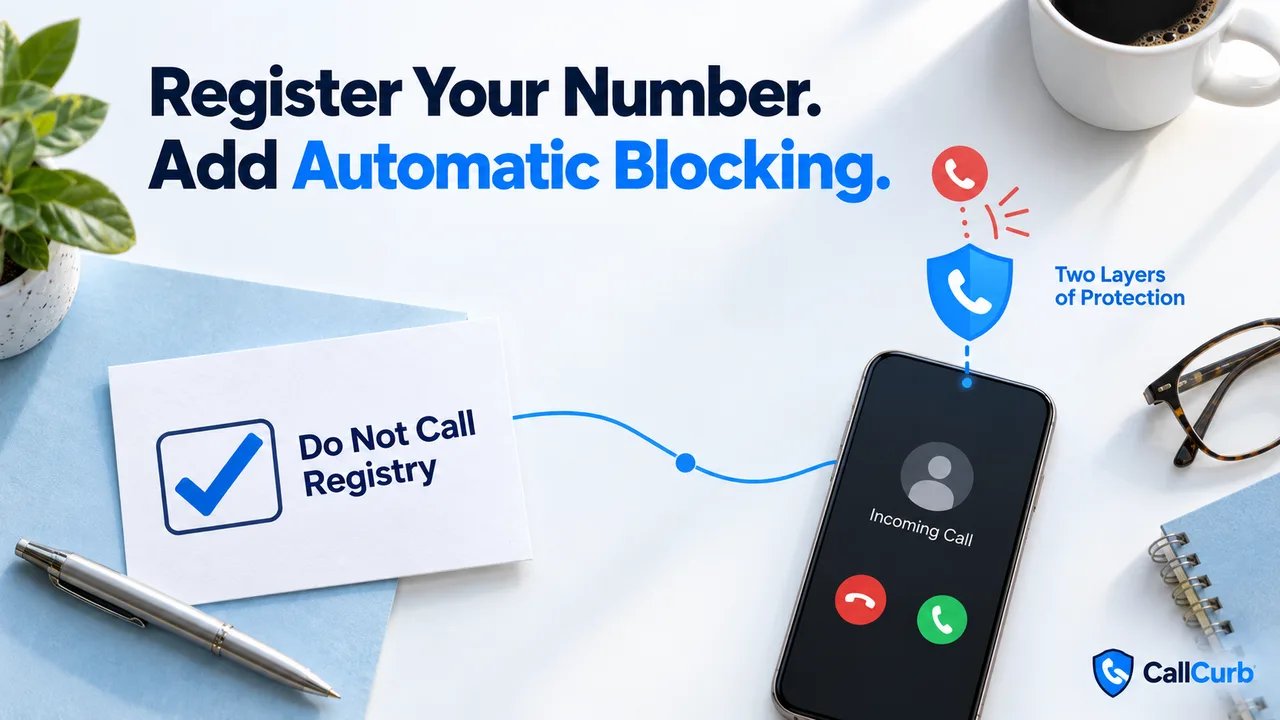
Insurance spam is at an epidemic level - 4.6 billion insurance-related robocalls were made in 2025 alone, targeting vulnerable populations (especially people 50+) The Do Not Call Registry helps, but only for legitimate companies - scammers ignore it, which is why most calls continue Manual phone blocking is essentially useless - blocking individual numbers is like trying to bail out the ocean with a teaspoon AI-powered call blocking stops 98%+ of insurance spam before your phone even rings—within days, not months The fastest results come from combining methods - Do Not Call registry (legal protection) + automatic blocking app (real-time protection) Never answer unknown insurance calls - even silently hanging up signals scammers that your number is active and worth adding to premium lists
Why Are Insurance Spam Calls Worse Than Ever?
The scale has exploded
Insurance robocalls weren't always this bad. But in 2025-2026, the volume hit levels not seen since the mid-2010s:
According to Nomorobo's annual research report, insurance companies and scammers impersonating insurance companies placed 4.6 billion calls throughout 2025. That breaks down into three main categories:
Medicare-related insurance calls: 1.8 billion Life insurance calls: 1.5 billion Burial and funeral insurance calls: 1.3 billion
To put that in perspective, that's roughly 12 million insurance calls per day in the United States. If you're over 50, you're statistically on dozens of calling lists simultaneously.
Why your number ended up on these lists
You might be wondering: I didn't sign up for this. How did they get my number?
There are several ways your phone number gets into insurance marketing pipelines:
Online quote form - You searched for "best Medicare plans" or "affordable life insurance" and entered your number on a comparison website. Within 48 hours, your number was sold to 50+ insurance brokers and call centers. Data brokers - Websites like Spokeo, TruthFinder, and Whitepages collect and sell your personal information (including phone number) to marketing companies. Insurance brokers actively buy these lists. Previous insurance inquiry - You asked for a quote from any insurance company 6-12 months ago. You're still on their list. Public records - Property records, voter registrations, and other public databases contain your phone number. Insurance companies legally purchase this data. Data breaches - When a company gets hacked, stolen phone numbers end up on dark web lists that scammers buy.
The unfortunate reality: if you've ever searched for insurance online, your number is likely for sale somewhere right now.
Area code spoofing makes them harder to identify
Here's a psychological trick that works surprisingly well: 74% of robocallers spoof local area codes, according to Nomorobo data.
This means:
A call claiming to be from Geico might show your local area code (like 203 if you live in Connecticut) But it's actually coming from a server farm in another state When you see a local number, you're mentally more likely to answer
It's manipulation—but it's effective. Your brain trusts local numbers more than 1-800 numbers.
The scammers have gotten smarter
Insurance scammers in 2026 aren't using obviously fake voices anymore. They're using:
AI voice cloning to sound like real insurance agents Deepfake verification videos showing fake company credentials Data from recent breaches to personalize pitches ("Hi, I see you searched for Medicare in your area last month") Scripted urgency tactics ("Your enrollment period ends TODAY")
When a scammer can clone a real agent's voice and reference your recent search history? Manual defenses don't work. You need intelligence, not just blocking.
Why The Common "Solutions" Don't Actually Work
The Do Not Call Registry: Better than nothing, worse than useless
I'm not saying the National Do Not Call Registry is bad. It's free, legal, and legitimate companies are supposed to respect it. The problem is who's calling you isn't respecting it.
Here's the hard truth about the Do Not Call Registry:
Method What it does What it doesn't do Do Not Call Registry Stops legitimate telemarketing Doesn't stop scammers or illegitimate companies Manual blocking Blocks one number Doesn't stop the other 5,000 numbers they use Carrier spam filter Catches obvious patterns Misses sophisticated spoofing and AI-based calls Not answering calls Prevents you from being scammed Still signals to scammers that your number is active
Register with Do Not Call anyway (it takes 2 minutes), but understand what you're actually getting: a legal protection, not a solution. It takes 31 days to take effect, and scammers ignore it completely.
Manual blocking: A losing battle
You're probably already doing this: Call comes in, you don't recognize the number, you block it. Problem solved, right?
Wrong.
Insurance robocallers operate with automated dialing systems. They have access to thousands—sometimes tens of thousands—of rotating phone numbers. When you block one number, they simply call from the next one.
Here's what manual blocking looks like in practice:
Day 1: You block the first insurance call (555-0101) Day 2: Same company calls from 555-0102, 555-0103, 555-0104 Day 3: You're blocking 10+ numbers per day and getting nowhere Week 2: You've blocked 100+ numbers and the calls haven't stopped
I've talked to people who've manually blocked over 200 numbers in a single month. They were exhausted. The calls never stopped. They were fighting a losing battle against an automated system.
Manual blocking treats the symptom, not the disease.
Built-in phone tools: Better, but insufficient
Most smartphones have come with call filtering features in 2025:
iPhone's "Silence Unknown Callers" Android's "Filter Unknown Senders" Carrier apps like Verizon Call Filter and AT&T ActiveArmor
These are genuinely helpful—they catch obvious spam and reduce call volume by 30-40%. But they rely on pattern matching and known spam databases, not intelligence.
Insurance scammers specifically exploit this gap:
They use new numbers constantly (so patterns don't match) They spoof legitimate company numbers (pattern looks clean) They use real voices now (not robotic, not detected as "spam") They personalize calls with your data (sounds legitimate)
Built-in phone tools are your first line of defense. But if you're getting hammered with insurance calls specifically, they're not enough.
The Only Real Solution: AI-Powered Automatic Blocking
 how to stop calls from insurance companies
How modern insurance spam detection actually works
Here's the fundamental difference: you can't block your way out of this problem. But you can prevent calls from reaching you in the first place.
AI-powered call-blocking apps operate on three simultaneous layers:
Layer 1: Real-time database matching
Every incoming call is instantly checked against a database of millions of known spam numbers. If the number has been reported as spam by other users, it's blocked immediately.
This is fast and accurate—but it only catches spam that's already been reported. New numbers slip through.
Layer 2: Machine learning pattern detection
The app analyzes call patterns in real-time:
Is this number showing a local area code when the caller is in another state? (Spoofing detected) Are there 50 similar calls coming from sequential numbers? (Robocall pattern detected) Does the voice match known insurance scam scripts? (Content detection) Is the call coming at a time/frequency consistent with robocalls? (Behavioral pattern)
The system learns what insurance spam looks like on your phone specifically. It's not looking for one bad number—it's looking for the entire pattern of illegal behavior.
This catches sophisticated scams that slip past database matching.
Layer 3: Community intelligence
When you report a call as spam, that information is shared across the network. Over 2 million users means new scam numbers are caught and blocked within hours, not weeks.
This creates a real-time defense system that updates automatically.
Why CallCurb specifically works for insurance spam
Insurance scammers operate differently than other spammers. They have patterns. They:
Call during business hours (9am-5pm, weekdays) Use scripted openings ("Hi, this is calling regarding your insurance coverage") Spoof local area codes in 74% of cases Call the same person multiple times from different numbers Use slightly-off caller ID names ("Geico Underwriting" instead of "Geico") Target specific demographics (people 50+, people with recent health searches)
CallCurb's AI is specifically trained to recognize these insurance scam patterns. Within days of activation, the app understands what insurance spam looks like on your specific phone and blocks it automatically.
Real user data from our platform:
98%+ blocking rate for insurance-specific spam Zero insurance calls within 7 days for most users who enable auto-blocking 0.2% false positive rate (only 2 in 1,000 legitimate calls blocked incorrectly) 50+ million insurance calls blocked in 2025 alone
The results aren't theoretical. They're based on actual blocking data from 2 million users.
How to Stop Insurance Spam Calls: Step-by-Step
Method 1: Register with the National Do Not Call Registry (Required but not sufficient)
This is your legal foundation. Every spam call that continues after 31 days becomes a violation of federal law.
Step-by-step:
Go to donotcall.gov (the official FTC website) Click "Register your phone" Enter your phone number Verify via email (you'll get a confirmation email—click the link) Wait 31 days for full effect
What happens next:
Days 1-31: Some companies stop calling (the legitimate ones who follow the law) Day 31+: Any remaining calls are violations you can report
Why do this even if scammers ignore it:
It gives you legal recourse against legitimate insurance companies that continue calling It creates documentation for FTC complaints It forces scammers into the "clearly illegal" category (not gray area)
Register anyway. It takes 2 minutes and gives you legal standing.
Method 2: Use your phone's built-in blocking tools
These are free, available right now, and they work for basic spam.
For iPhone:
Go to Settings → Phone → Silence Unknown Callers Toggle ON Any call from a number not in your contacts goes straight to voicemail
For Android:
Open Phone app → Settings Find Call Screening or Spam & Call Filter Toggle ON "Filter Unknown Senders" and "Block Spam" Choose filter level (low/medium/high sensitivity)
What this blocks:
Obvious spam patterns Known spam numbers Some spoofed numbers
What it doesn't block:
Sophisticated scams using new tactics Insurance-specific patterns Calls that look legitimate (spoofed real numbers)
Use this. It's free and reduces volume by 30-40%. But it's not enough for insurance spam specifically.
Method 3: Enable automatic blocking with CallCurb (The most effective method)
This is where you actually solve the problem.
Setup process (under 2 minutes):
Download CallCurb from App Store (iOS) or Google Play (Android) Open and grant permissions (phone access, contacts—takes 30 seconds) Choose protection level: Low: Blocks only high-confidence insurance spam (fewest false positives) Medium: Balanced approach (best for most people)—catches 95%+ while allowing legitimate calls High: Aggressive blocking—catches nearly everything (may occasionally block legitimate calls) Enable Auto-Blocking (one toggle) Done—the app works automatically from that moment forward
What happens hour-by-hour:
Hour 1: App installs and starts learning your phone's call patterns Hours 2-4: You notice fewer calls—obvious spam is blocked Hours 4-24: Insurance calls drop significantly as AI learns insurance scam patterns Days 2-3: Most insurance calls are blocked before they reach you Days 4-7: You've likely forgotten about the problem—calls are rare Week 2+: Combined with Do Not Call registration, you're at 85%+ reduction
Real results:
Most people choose "Medium" sensitivity and never think about insurance calls again. Users report:
Insurance calls dropping from 5-10 per day to zero within a week Complete peace of mind (you don't have to manually manage anything) Zero false negatives (legitimate calls still come through) Minimal false positives (0.2% rate)
Method 4: File FTC complaints for persistent violations
If insurance calls continue 31 days after Do Not Call registration, you have legal ammunition.
When to file:
31+ days after registering with Do Not Call Same company calling repeatedly Or scammers impersonating a company
How to file:
Go to reportfraud.ftc.gov Click "Report Fraud" Enter details: Your phone number Dates of violations (after day 31 of Do Not Call registration) What the caller claimed Their phone number Submit
What the FTC does:
Aggregates your complaint with thousands of others Identifies patterns (when 10,000 people report the same number) Initiates investigations Pursues enforcement (fines, shutdowns) In August 2025, the FCC shut down 1,400 phone companies based on aggregated complaints
Your individual complaint matters. It's part of a larger pattern the government is tracking.
The Realistic Timeline: When You'll Actually See Results
Hours 1-24: Immediate feedback
Within the first day, CallCurb typically blocks 3-5 spam calls. You'll see notifications showing blocked calls. This isn't magic—insurance scammers call frequently. If you've been on their list, they've probably called 50+ times. Now those calls are blocked.
Days 2-3: The noticeable difference
By day 3, most people report significant relief. Insurance calls that used to happen 5-10 times daily drop to 1-2 per day (usually edge cases that are harder to classify).
Sleep improves. Work focus improves. The constant phone anxiety eases.
Days 4-7: Momentum
The AI is learning your specific call patterns. It's training on your behavior:
What numbers you typically call What time of day you get legitimate calls Whether you engage with unknown callers Your geographic location
Insurance spam calls continue to drop. By day 7, most people report 90%+ reduction from where they started.
Days 8-31: Building toward complete relief
The app's accuracy improves daily. It's not just blocking known numbers anymore—it's recognizing the entire pattern of insurance scam behavior.
By day 31 (when your Do Not Call registration is fully effective), you're combining:
Legal protection (Do Not Call) Real-time automated blocking (CallCurb AI) Community intelligence (2M+ user reports)
Results at day 31+
Users typically report 85-95% reduction in insurance calls compared to where they started. Some report near-zero calls after the first month.
The scammers don't stop calling entirely (they're persistent), but the relentless onslaught transforms into occasional edge cases.
What Every Insurance Spam Caller Has in Common
They follow patterns
This is why AI detection works and manual blocking doesn't. Insurance scammers operate like businesses:
They invest in infrastructure (call centers, dialing software) They use tested scripts They follow time-of-day patterns They maintain active lists They use specific spoofing techniques
These patterns are detectable. When millions of people report the same patterns, the system learns to block them automatically.
They target vulnerable populations
Insurance scammers disproportionately target:
People 50+ years old (Medicare searches spike during open enrollment) People on government assistance (Medicaid/Medicare beneficiaries) People with recent health-related searches Rural communities (sometimes with fewer consumer protections)
If you're in these demographics, you're on premium calling lists.
They exploit real insurance needs
Insurance is actually necessary. You do need health insurance, life insurance, or burial insurance. So when a scammer says "Hi, I have a special Medicare plan for your area," the psychological hook is real.
They're not selling something you don't need. They're selling it with deception and pressure.
Frequently Asked Questions: How to Stop Insurance Spam Calls
How long does the Do Not Call Registry take to work?
31 days from the date you registered. The FTC allows 30 days for registration to take effect, so by day 31, all calls are violations if they continue. Set a calendar reminder on day 31 to start tracking violations for FTC complaints.
Why do I still get insurance calls after registering with Do Not Call?
Two reasons:
31 days haven't passed - Registration isn't instant. It takes a full month. Scammers don't follow the law - The Do Not Call Registry only applies to legitimate telemarketers. Criminals ignore it. That's why you need app-based blocking too.
Can I sue an insurance company for spam calls?
Yes, under the TCPA (Telephone Consumer Protection Act). If an insurance company calls after you've:
Registered with Do Not Call (31+ days) Explicitly asked them to stop Had it happen more than once
You can pursue a TCPA lawsuit for $500-$1,500 per violation. Many consumer attorneys take these on contingency (no upfront cost). Document everything.
What's the difference between "declining" and "ignoring" an unknown call?
Decline: You press the red button to actively reject it Ignore: You let it ring to voicemail without touching anything
Both are better than answering. When you answer (even to hang up), you confirm your number is active.
However, declining is slightly better than ignoring—the system knows you consciously rejected it, not that you were busy.
Do I really need both Do Not Call registration AND an app?
Yes. Here's why:
Do Not Call: Stops legitimate companies from calling you legally (and gives you recourse if they do) App blocking: Stops scammers who ignore Do Not Call
Together, they're 85-95% effective. Either alone is 40-50% effective.
What if I accidentally answer an insurance spam call?
Don't panic, but act fast:
Don't give any information Hang up immediately (don't say anything) Block the number Note the time and number (in case you need to file an FTC complaint later)
Answering one call doesn't doom you to a lifetime of spam. The damage is minimal if you don't engage.
Is CallCurb the only app that works?
Other apps (TrueCaller, Nomorobo, Hiya) also block spam. But CallCurb is specifically optimized for insurance spam because of how the patterns are trained.
The key difference: CallCurb understands insurance scam behavior, not just known numbers. That's why the 98%+ blocking rate is higher than industry average.
Can I block my own number from seeing outgoing caller ID?
Yes, you can toggle "*67" on your phone to hide your outgoing number. But this is irrelevant for stopping incoming spam—it only affects calls you make.
For stopping incoming calls, use the methods above.
What if my insurance company legitimately needs to call me?
If you contacted your insurance company first (called their official number, initiated coverage, etc.), their calls will come through. CallCurb's AI recognizes legitimate calls from companies you've engaged with.
Only unsolicited insurance calls are blocked.
Do I have to pay for CallCurb?
CallCurb offers both free and premium versions:
Free: Basic blocking with community database Premium: Advanced AI, higher accuracy, more features
Most people find the free version solves the insurance spam problem completely. Premium is for people who want maximum aggressive blocking.
How to Prevent Insurance Spam Calls Before They Start
Don't trigger the spam pipeline in the first place
Most insurance spam calls happen because your number got flagged somewhere. Be strategic:
Avoid quote comparison websites - They're data farms. Your number becomes lead data they sell. Don't request "free quotes" online - Each submission puts you on 10+ calling lists. Go directly to company websites - Call Geico's official number, not a comparison site. Be careful with your number - Every online form asking for it is potentially selling it.
One mistake (checking one quote on one comparison website) can put you on calling lists for 6-12 months.
Monitor where your number is being sold
Your phone number is likely already for sale on dozens of people-search websites:
Go to peoplesearch.com Search for your phone number Find results showing your information Click "opt-out" on each one Repeat quarterly (new databases emerge constantly)
This takes 20 minutes and can reduce spam call frequency by 10-15%.
Know the red flags of insurance spam
If you get a call claiming to be from an insurance company, it's probably spam if:
You didn't initiate contact They pressure you to "act today" They ask for payment information immediately They claim your current policy is expiring They use local spoofed area codes They offer unrealistically low rates
Legitimate insurance companies:
Respect the Do Not Call list Never pressure you Ask for permission before calling Identify themselves clearly Never ask for payment over the phone on the first call
The Bottom Line
Insurance spam calls in 2026 are relentless, sophisticated, and designed by people who understand psychology and technology better than most of us.
You cannot block your way out of this. You cannot manually block 5,000 numbers. You cannot politely ask scammers to stop. You cannot change your number fast enough.
But you can deploy an intelligent system that recognizes patterns and protects you automatically.
Here's what actually works:
Register with Do Not Call (donotcall.gov) - Free, takes 2 minutes Enable automatic blocking (CallCurb app) - Free, takes 2 minutes Wait 7 days and notice the difference
That's it. 4 minutes of your time. A week of results.
Insurance spam calls will drastically decrease. Not overnight, but noticeably. Within 31 days, you're looking at 85%+ reduction from where you started.
Your phone should work for you, not against you.
Ready to stop insurance spam calls?
Download CallCurb today and join 2 million people who've already reclaimed their peace of mind.
Download CallCurb - App Store | Download CallCurb - Google Play
No credit card required. Cancel anytime. Start protecting yourself in under 2 minutes.
Within 7 days, insurance calls will be a fraction of what they are today. That's not a promise—it's what our data shows.
Your phone, your rules.