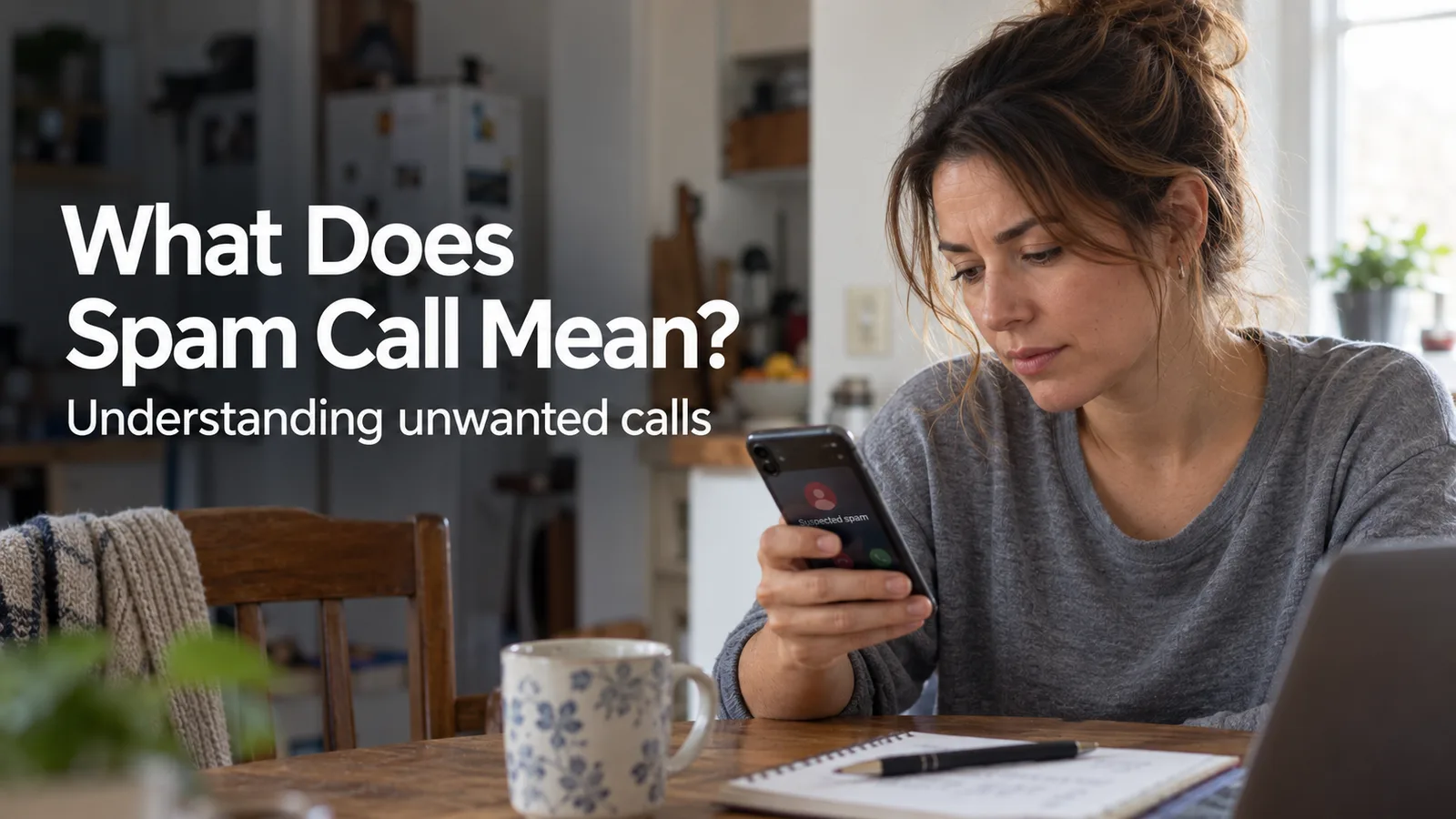
you're scrolling through your phone when it rings. Your screen shows "Spam Risk" or "Potential Spam" in bright red letters. You let it go to voicemail without thinking twice.
But have you ever stopped to think: What does that actually mean?
Most people see these labels and assume they're bad. Some ignore them completely, worried they might miss a legitimate call. Others don't understand the difference between "Spam Risk," "Potential Spam," "Scam Likely," and regular spam calls.
Here's the reality: these labels mean different things, and understanding them could save you from serious fraud.
This guide explains exactly what does spam call mean, what those warning labels mean, why your phone is flagging certain calls, and how to respond when you see them.
Key Takeaways
- A spam call is any unsolicited, unwanted phone call you didn't ask to receive, from telemarketing to scams
- "Spam Risk," "Potential Spam," and "Scam Likely" are different warning levels with different meanings—not all spam calls are equally dangerous
- Your carrier automatically flags numbers using algorithms that analyze call patterns, user reports, and known spam databases
- Seeing a spam warning doesn't mean you're being targeted—carriers block over 50 billion spam calls annually, so volume is high
- You should generally not answer spam-flagged calls, but understanding why they're flagged helps you make smart decisions
- AI-powered detection systems identify 96%+ of spam before it reaches your phone when properly configured
What Does Spam Call Mean? The Basic Definition
The simplest explanation
A spam call is any unsolicited, unwanted telephone call you did not ask to receive.
That's it. Spam doesn't necessarily mean scam. It doesn't necessarily mean illegal. It means someone called you without your permission, usually to sell you something or get your information.
The more detailed definition
According to the FTC and industry standards, a spam call is:
An unwanted or unsolicited phone call transmitted in bulk to a consumer without prior consent, typically originating from:
- Automated lead-generation dialers
- Aggressive sales companies
- Telemarketing agencies
- Robocall systems
- Fraud and scam networks
The key word is unsolicited. If you didn't request the call, didn't opt in to being contacted, and didn't specifically ask them to call you—it's spam.
Why the definition matters
Understanding what spam means matters because it's different from other types of unwanted calls:
| Type | What It Is | Intent | Risk Level |
|---|---|---|---|
| Spam Call | Unsolicited, bulk call | Unwanted marketing/sales | Medium (annoying) |
| Robocall | Automated/pre-recorded message | Variable (could be legitimate) | Medium (hard to verify) |
| Scam Call | Deceptive call designed to defraud | Theft, identity fraud | High (criminal) |
| Telemarketing | Sales call from legitimate company | To sell product/service | Low (sometimes legal) |
A spam call could be all of these things combined, or just one. The important distinction: spam is defined by being unwanted, not by what the caller intends.
What Does "Spam Risk Calls" Mean? (And Other Warning Labels)
Your phone shows you different labels when it thinks a call might be unwanted. Each label means something slightly different.
What does "Spam Risk" mean?
"Spam Risk calls is AT&T's version of a warning label that alerts you the incoming call exhibits patterns associated with unwanted communications.
When you see "Spam Risk" on your screen:
- Your carrier's automated system thinks the call might be unwanted
- The system flagged the number based on calling patterns, user reports, or spoofing detection
- You should probably not answer unless you recognize the number
- It does NOT mean the call is definitely spam—it's an educated guess
What does "Potential Spam" mean?
"Potential Spam is Verizon's version of a moderate warning label suggesting a call may be unwanted or bothersome.
The difference from "Spam Risk":
- Slightly lower severity than "Spam Risk"
- Means the system thinks the call is probably unwanted
- Usually from numbers that don't match local geographic patterns
- Often includes legitimate but aggressive telemarketers
What does "Scam Likely" mean?
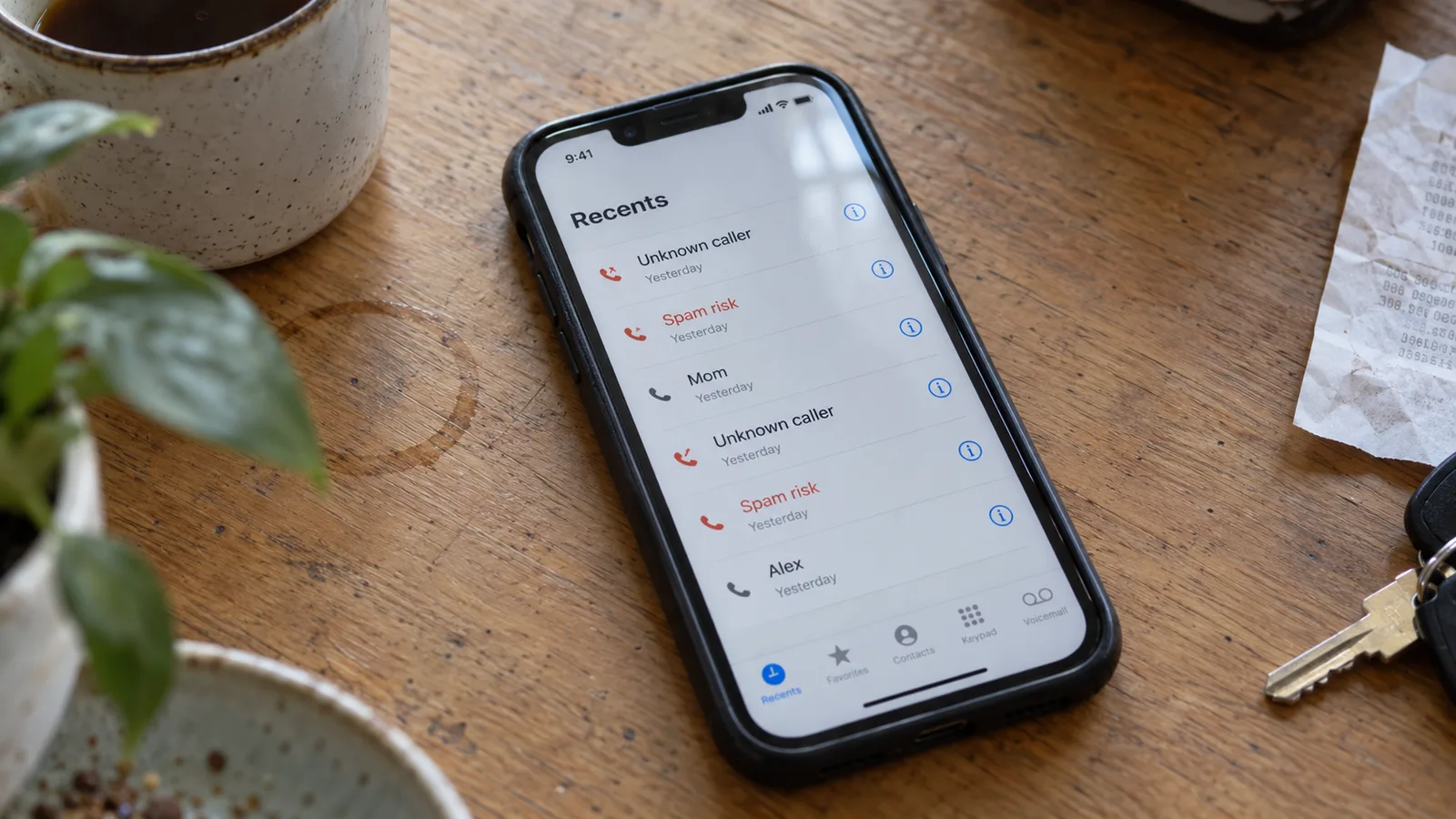
"Scam Likely" is a high-severity warning indicating the system thinks the call is probably fraudulent and attempting to steal money or personal information.
Key difference:
- "Scam Likely" = intentional fraud (criminal intent)
- "Spam Risk" = probably unwanted (annoying intent)
- If you see "Scam Likely," definitely don't answer
Other warning labels you might see
Depending on your carrier and phone, you might see:
- "Suspected Spam" (Verizon alternative)
- "Fraud Risk" (high severity, criminal intent)
- "Spam Likely" (probable unwanted call)
- "Spam?" (uncertain, might be spam)
- "Call from Unknown Name" (can't identify caller)
- "Potential Fraud" (similar to Scam Likely)
Bottom line: Labels with "Scam" or "Fraud" = don't answer. Labels with "Spam" or "Risk" = probably don't answer unless you recognize the number.
What Does "Potential Spam" Mean on Your Phone?
The definition
When your phone displays "Potential Spam," it means your mobile carrier has flagged the number as likely unwanted based on:
- Suspicious origin - Number can't be verified as legitimate
- Unknown source - Carrier doesn't recognize the number
- Reported by users - Multiple people reported this number as spam
- Unusual calling patterns - High volume calls, short durations, rapid redialing
- Spoofed indicators - Number appears to be masked or spoofed
Why you see this label
Your carrier doesn't verify every call in real-time. Instead, they use automated systems that analyze:
- User feedback - How many people marked this number as spam
- Call patterns - Does the calling behavior match known spam tactics
- Geographic data - Does the call area code match the actual location
- Third-party databases - Cross-reference against known spam lists
- Spoofing detection - Is the caller hiding their real number
Is "Potential Spam" dangerous?
Not necessarily. "Potential Spam" is a moderate warning. It could be:
- A legitimate telemarketing company using aggressive tactics
- An automated appointment reminder from your doctor
- A delivery notification (misclassified as spam)
- An actual scammer (the serious case)
The system flags it as "potential" because it's uncertain. Not definitely spam, but probably unwanted.
How Your Carrier Decides What's Spam (The Technology Behind It)
Understanding how spam gets flagged helps you decide whether to answer calls with proper detection systems like CallCurb.
1. Call pattern analysis
When you or other users mark a call as spam through your phone, that feedback trains the spam detection system.
What patterns trigger spam flags:
- High call volume - Thousands of calls in a short timeframe
- Short call duration - Robocalls that hang up immediately (average under 6 seconds)
- Rapid callbacks - Same caller calling you multiple times within minutes
- Sequential dialing - Calling many numbers in rapid succession
- Time-based patterns - Calls at unusual hours (like 2am)
2. Caller ID spoofing detection
Scammers spoof numbers to make calls appear local or trustworthy.
Detection methods:
- Area code mismatch - Caller displays local area code but is from another state
- Number similarity - Uses numbers similar to yours ("neighbor spoofing")
- Real company impersonation - Spoofs actual bank/business numbers
- Authentication failure - STIR/SHAKEN protocol shows the number doesn't match
3. User feedback mechanisms
When you mark a number as spam:
- Your feedback goes to your carrier's database
- The number accumulates "spam scores" from all users
- Higher spam scores = more likely to be flagged for everyone
- The system learns which numbers are actually spam vs. legitimate
4. Reputation scoring
Phone numbers receive reputation scores based on:
- How many times they've been reported as spam
- Geographic consistency (does the area code match the actual location?)
- Call frequency and timing patterns
- Whether they appear in third-party spam databases
- Business verification status
Lower scores = more likely to be flagged as spam
5. Carrier-specific databases
All major carriers maintain their own spam databases:
- AT&T - Over 50 billion calls analyzed, flags "Spam Risk"
- Verizon - Uses similar analysis, flags "Potential Spam"
- T-Mobile - Similar system with own flagging criteria
- Third-party apps - Truecaller, Hiya, RoboKiller have independent databases
What Does It Mean When Spam Risk Calls You?
If you get a call flagged "what does a spam risk call mean," what does that actually tell you about the caller?
What it probably means
The call is most likely:
- An unwanted sales call - Telemarketer, insurance company, home improvement
- An automated robocall - Pre-recorded message trying to sell something
- A lead-generation call - Someone selling you information they bought about you
- An aggressive marketing campaign - Multiple calls from the same company
What it might mean (less likely)
- A legitimate business using aggressive calling tactics (misclassified)
- An appointment reminder that looks like spam (false positive)
- A call from someone you do know but their number appears spoofed
What you should do
General rule: Don't answer. Here's why:
- Scammers listen for answers - They mark numbers that respond as "active" and sell them as premium leads
- Some questions are traps - "Can you hear me?" or "Is this [your name]?" seem innocent but capture voice samples for identity theft
- Voicemail is your friend - If it's legitimate, they'll leave a message and you can call back
What NOT to do
- Don't press buttons - "Press 1 to remove from list" confirms you're listening and active
- Don't say anything - Even silence is recorded as a response
- Don't confirm your identity - Don't say "yes" if they ask "Is this [your name]?"
- Don't provide information - Never give SSN, card numbers, or account details to unsolicited callers
Spam Calls vs. Robocalls vs. Scam Calls: What's the Difference?
These terms get confused, but they mean different things. Understanding what does a spam phone call mean vs. other types matters.
Spam Calls
Definition: Any unsolicited, unwanted phone call
Delivery: Can be from a real person or automated system
Intent: Usually to sell something (but not always)
Risk level: Medium (annoying, but not necessarily criminal)
Examples: Telemarketing, insurance quotes, mortgage offers
Robocalls
Definition: Automated phone calls using pre-recorded messages
Delivery: Automated dialer system (no human involved)
Intent: Variable (could be legitimate or fraudulent)
Risk level: Medium (hard to verify legitimacy)
Examples: Appointment reminders, political campaigns, scam calls
Key point: A robocall isn't necessarily spam or a scam—it's just the technology used to deliver the call. Your doctor's appointment reminder is a robocall. So is a mortgage scam.
Scam Calls
Definition: Deceptive calls designed to commit fraud
Delivery: Usually robocalled, sometimes from real person
Intent: Criminal (steal money, identity, information)
Risk level: High (financial and identity theft threat)
Examples: IRS impersonation, bank fraud alerts, prize scams
Telemarketing Calls
Definition: Sales calls from companies trying to sell products/services
Delivery: Often from real salespeople, sometimes robocalls
Intent: Commercial (to make a sale)
Risk level: Low (usually legal, though annoying)
Examples: Insurance companies, credit cards, solar panels
The relationships between them
SPAM CALL (umbrella term - all unsolicited calls)
├── Telemarketing (legitimate sales)
├── Robocalls (automated - could be anything)
├── Scam Calls (criminal fraud)
└── Other unwanted calls (surveys, pranks, etc.)
Important: A single call could be all of these at once. A spam robocall trying to scam you is both spam AND robocall AND scam call.
Why Spam Calls Happen: The Numbers Behind It
The scale is massive
According to October 2026 data, understanding "what does spam calls mean" is critical:
- Carriers identified or blocked over 50 billion calls between 2023-2025
- 2.56 billion robocalls monthly in the US (2025 data)
- 71% of spam calls are scams, not legitimate telemarketing
- Average person receives 20+ spam calls per month
- Peak spam call day: Tuesdays at 2pm (when most people answer)
Why you're on calling lists
Your number got to scammers because:
- You applied for a loan - Credit bureaus sold your info as "trigger leads"
- You filled out an online form - Any quote request sells your number
- You're in public records - Property records, voter registration, phone directories
- Data breach - Your info was stolen and sold on dark web
- You answered an unsolicited call - Scammers marked your number as "active"
- Someone sold your number - Companies you do business with sold contact lists
Why spam calls are profitable
Spammers persist because:
- Low cost, high volume - Automated systems call thousands for pennies
- Low conversion rates don't matter - If they reach 100,000 people and 0.1% fall for it, that's 100 victims
- Easy to hide - Spoofing makes them hard to trace
- Legal gaps - Enforcement can't keep pace with volume
- International operations - Many scammers operate from overseas, hard to prosecute
What Happens If You Answer a Spam or Potential Spam Call?
The immediate risk
When you answer:
- You confirm your number is active - Your number gets added to "responsive" lists
- They record your voice - "Yes" or "uh-huh" can be used for voice cloning or identity verification
- You're marked as a target - Your number becomes more valuable and gets sold to other scammers
- They ask "qualifying" questions - Seemingly innocent: "Can you hear me?" or "Is this [your name]?"
The lasting damage
Scammers who confirm you're responsive:
- Call you more frequently - You're a "hot lead" with higher conversion potential
- Sell your number at premium rates - Active numbers are worth more than inactive ones
- Share across networks - Your number gets passed to affiliated scam rings
- Cross-sell your data - If you're responsive, they sell your info as "pre-vetted"
What serious scammers do with information
If you provide information on a spam/scam call:
- Identity theft - Create accounts, apply for credit in your name
- Financial fraud - Drain accounts, take loans against your name
- Credential theft - Use your passwords for other accounts
- Tax fraud - File false returns using your SSN
- SIM swap - Get your phone transferred to them, lock you out
How to handle it if you accidentally answer
If you pick up before realizing it's spam:
- Hang up immediately - Don't engage at all
- Don't correct them - If they say the wrong name, hang up (don't say "I'm [correct name]")
- Don't press buttons - Pressing anything confirms you're listening
- Block the number - Prevent callbacks from the same number
- Don't call back - Even to verify, they might be spoofing
How to Identify and Block Spam Calls with Technology
Built-in carrier protection
Your carrier likely offers free spam filtering:
- AT&T Call Protect - Blocks or alerts on suspected spam
- Verizon Call Filter - Identifies spam and blocks if enabled
- T-Mobile Scam Shield - Free tier offers basic blocking
- Most carriers - Have free options, paid premium options
These catch 30-40% of spam but miss sophisticated calls.
Phone-based blocking
Your phone has built-in features:
iPhone:
- Settings → Phone → Silence Unknown Callers (silences unknown numbers)
- Automatically blocks numbers you've marked as spam
- Works with apps like Hiya and Truecaller
Android:
- Settings → Call Screen → Block Unknown Callers
- Built-in spam detection improving yearly
- Integration with third-party apps
These catch 40-50% of spam depending on settings.
Third-party apps
Dedicated spam-blocking apps offer better detection:
- Truecaller - Database of 500M+ spam numbers
- Hiya - Call verification with caller ID
- RoboKiller - AI listens to calls, blocks suspicious patterns
- CallCurb - AI trained specifically on spam patterns, 96%+ blocking rate for financial spam
Advanced apps catch 95%+ of spam by analyzing call patterns in real-time.
Do Not Call Registry
Register at donotcall.gov (free, permanent):
- Prevents legitimate telemarketing companies from calling
- Gives you legal recourse if they continue after 31 days
- Doesn't stop scammers (they don't follow law)
- Takes 31 days to fully take effect
Frequently Asked Questions: Understanding Spam Calls
What's the difference between "Spam Risk" and "Potential Spam"?
Severity level difference:
- "Potential Spam" = Moderate warning (probably unwanted)
- "Spam Risk" = Similar warning, AT&T's labeling (probably unwanted)
Both suggest you shouldn't answer, but neither is as serious as "Scam Likely."
Can legitimate calls get flagged as spam?
Yes, absolutely. False positives happen regularly:
- Appointment reminders get flagged (especially from healthcare)
- Delivery notifications get flagged
- Company callbacks to old numbers get flagged
- New businesses don't have reputation scores yet
This is why the system says "Potential" and "Risk," not "Definitely Spam."
Should I answer a call just to tell them to stop?
No. Don't do this. Here's why:
- You confirm your number is active and responsive
- Scammers want you to respond (confirms you're listening)
- Even saying "Stop calling" is processed as a confirmation
- Your number becomes more valuable
Better: Just hang up, block, and report.
Why do spam calls show local numbers?
Spoofing makes calls appear local. Scammers do this because:
- Local numbers feel more trustworthy
- Higher answer rates on local calls (people assume it's someone nearby)
- STIR/SHAKEN authentication hasn't been fully implemented yet
- Easy to spoof with modern VoIP technology
What's the difference between spam and telemarketing?
Telemarketing is (sometimes) legal. Spam is not.
- Legal telemarketing - Has prior established business relationship, follows Do Not Call list, identifies company
- Telemarketing spam - Violates Do Not Call list, uses spoofing, deceives about identity
- Illegal spam - No relationship, no consent, breaks TCPA rules
If I see "Spam Risk," does that mean I'm being targeted?
No. Spam isn't personal. It's volume-based:
- Scammers call millions of numbers
- Your number isn't special; it's just one of thousands they try
- When they reach you, they don't know anything about you
- "Spam Risk" is a signal of volume calling, not targeting
Can I sue for spam calls?
Possibly, under the TCPA (Telephone Consumer Protection Act):
- You can sue for $500-$1,500 per call if they:
- Called with a pre-recorded message
- You didn't give written consent
- You asked them to stop and they continued
Reality: Most spam callers are judgment-proof (overseas, no assets). Focus on prevention, not litigation.
The Bottom Line: What Spam Calls Mean and What You Should Do
Simple version
- Spam calls are unsolicited calls you didn't ask for
- Warning labels like "Spam Risk" are educated guesses, not guarantees
- You should generally not answer because it makes your number more valuable to scammers
- Technology can block 95%+ of spam if properly configured
What the labels mean
| Label | Severity | Action |
|---|---|---|
| Spam Risk | Moderate | Don't answer |
| Potential Spam | Moderate | Don't answer |
| Spam Likely | Moderate-High | Don't answer |
| Scam Likely | High | Definitely don't answer |
| Fraud Risk | High | Definitely don't answer |
Your defense strategy
- Enable carrier spam filtering (free, 30% effective)
- Configure phone settings (free, adds 10-15%)
- Use third-party blocking app (CallCurb is 96% effective)
- Register with Do Not Call (free, legal protection)
- Never answer unknown numbers (behavioral defense)
Layered together, you'll reduce spam calls by 95%+ within days.
Ready to stop spam calls?
Understanding what spam calls mean is the first step. Actually stopping them is the next step.
Download CallCurb to block 96%+ of spam before they reach you.
Download CallCurb - App Store | Download CallCurb - Google Play | Learn More at CallCurb.com
No credit card. Free to download. Works immediately.