
Quick Answer: How Do I Stop Spam Calls From Loan Companies?
To stop spam calls from loan companies, opt out of prescreened credit offers at OptOutPrescreen.com so that the credit bureaus stop sharing your name for new lender offers, register your number on the National Do Not Call Registry at donotcall.gov, ask any legitimate lender that calls you to remove your number, report scam calls to the Federal Trade Commission at ReportFraud.ftc.gov, and use a call-screening app such as CallCurb to block the calls that keep arriving while the other steps take effect. Each step targets a different source. The opt-out reduces new prescreened lists, the registry gives you legal footing against legitimate telemarketers, a documented request creates a record if a real lender keeps calling, reports help regulators track scam networks, and call screening stops the calls already in circulation.
If you're wondering why loan calls started in the first place, the most common answer is a credit check or loan application you submitted at some point. That is the trigger, and understanding it is the key to choosing the right fix. The rest of this guide explains how the calls happen, how to stop each type, how to recognize scams, and what to do if you already responded to one.
Key Takeaways
- Loan calls often start after a credit inquiry or loan application, because that activity can place your information on prescreened offer lists
- OptOutPrescreen.com is the official place to opt out of prescreened credit offers, and it's free to use
- The National Do Not Call Registry helps against legitimate telemarketers, but scammers frequently ignore it
- Lead generators can also sell your number after you submit a form on a comparison, survey, or quote website
- Scammers often pose as lenders, so never send money, gift cards, or sensitive information in response to an unsolicited call
- Call screening with CallCurb helps block unwanted calls while your opt-outs and registrations take effect
- Stopping loan calls is a layered process. Most people see steady improvement over several weeks rather than an overnight change
Why Loan Companies Keep Calling You
Most people don't realize how a single loan application can lead to months of phone calls. The chain usually involves more than one company, which is why the calls can feel endless. Understanding that chain helps you choose the right fix for each link.
The prescreened offer pipeline
When you apply for credit, lenders can review your credit file. Under the federal Fair Credit Reporting Act, consumer reporting agencies can also provide lists of consumers who meet certain criteria, and lenders can use those lists to make prescreened offers. Depending on the offer, the list may include contact details, which is one reason companies you've never dealt with can end up calling you.
The Fair Credit Reporting Act also gives consumers a right to opt out of prescreened offers. The Consumer Financial Protection Bureau explains this right on its website at consumerfinance.gov. The official opt-out is run through OptOutPrescreen.com, which is maintained by the major credit bureaus.
Lead generators and data brokers
Loan-related phone numbers are also sold by lead generators. A form you filled out on a comparison website, a survey, a free quote page, or a sweepstakes can pass your details to many buyers at once. Once your number is in a lead database, it can be resold repeatedly, sometimes for months or years.
This is why calls can keep arriving even after you've opted out of prescreened offers. The prescreened pipeline and the lead pipeline are separate, so you need to address both.
Scammers who imitate lenders
Some calls aren't from real lenders at all. Scam networks impersonate lending companies, spoof phone numbers so they look local or familiar, and pressure callers to pay an upfront fee, share bank details, or provide a Social Security number. Their goal is to steal money or identity, not to make a loan.
These calls can be hard to tell apart from legitimate marketing at first. That's why the strategy in this guide doesn't depend on guessing who is real. It relies on stopping the lists, documenting requests, reporting scams, and screening calls automatically.
The Main Types of Loan Calls
Not every loan call is the same, and identifying the type helps you decide how to respond.
Prescreened marketing calls
These offers come from lenders who obtained your information after a credit check. The call often mentions a "pre-approved" or "pre-qualified" offer. The company may be entirely legitimate, but you didn't request contact, and you're entitled to say no and ask to stop.
Lead generator calls
These calls come from companies that purchased your contact details from a website where you submitted a form. They can be persistent, and they often rotate through several numbers so that blocking one doesn't stop the next call.
Scam calls
Scam calls pressure you to act immediately. They may claim you've been approved for a loan you never applied for, ask for an advance fee to "release" funds, request bank logins or Social Security information, or pretend to be a well-known company. These calls are illegal, and you should never follow their instructions.
Step 1: Opt Out of Prescreened Credit Offers
This step addresses the source of many loan calls. Opting out reduces the number of companies that can receive your information for prescreened offers.
How to opt out
- Go to OptOutPrescreen.com, the official opt-out site maintained by the credit bureaus
- Choose the option that fits your situation. The five-year opt-out can be completed online. A permanent opt-out generally requires submitting a signed form by mail.
- Provide the information the site requests and complete any verification steps
- Save the confirmation page or write down the date you submitted
Use the official site only. Some third-party websites copy the look of legitimate opt-out pages to collect personal information, so check the web address before you enter anything. The opt-out itself is free.
What the opt-out does and doesn't do
An opt-out tells participating credit bureaus not to include your name in prescreened offer lists going forward. It does not stop lenders from contacting you about an application you already submitted. It also doesn't affect lead generators who obtained your number from a different source, and it doesn't erase a list that was already sold.
What to expect over time
Opt-outs take time to fully process, and some lenders may still be working from older lists. Many people notice a decline in prescreened calls over several weeks. If you want a longer-lasting result, the permanent option is worth considering, since it doesn't require renewal.
Step 2: Register on the National Do Not Call Registry
Register your number at donotcall.gov, or call 1-888-382-1222 from the phone you want to register. Registration is free, and it doesn't expire.
What the registry does
Legitimate telemarketers are generally required to honor the registry. Under federal telemarketing rules, most sales calls to registered numbers are prohibited, with some exceptions for companies you already do business with and for certain nonprofit or political calls. Companies that violate the rules can face enforcement action.
What the registry doesn't do
The registry does not stop scammers, who often ignore it, and it doesn't stop calls from companies that claim an exemption. It also takes effect after a short waiting period. Think of it as one layer of protection rather than a complete solution.
Step 3: Ask Legitimate Lenders to Stop Calling
If a real lender calls you, you can ask them directly to stop. This is often one of the fastest ways to end calls from a legitimate company, and it creates a record if they continue.
How to make the request
- Say clearly, "Please add my number to your do-not-call list and stop calling me"
- Ask for the company's full name, its mailing address, and a callback number
- Note the date, the time, the name of the person you spoke with, and what you asked for
- Follow up in writing by email or mail when possible, and keep a copy of what you sent
Why documentation matters
A documented request makes it easier to show a violation if calls continue. Keep a simple log with each call's date, time, number, and any response. That log can support a complaint to the Federal Trade Commission or a state attorney general if the calls don't stop.
Don't engage beyond the request
If a caller starts asking about your income, employment, bank accounts, or existing debts, don't answer. Those questions can be a sign of a scam or a high-pressure sales process. Make your request, say goodbye, and end the call.
Step 4: Report Scam Calls
Reporting helps regulators spot patterns and pursue the networks behind the calls. Each report adds to the evidence they use.
- Report to the Federal Trade Commission at ReportFraud.ftc.gov. Include the phone number, the company name the caller used, the date and time, and what they asked you to do.
- Forward spam texts to 7726 so your carrier can identify and block the sender
- Keep records of each call, including call log screenshots and any voicemail you received
You can also check the official consumer resources at consumer.ftc.gov for updated guidance on recognizing and reporting scams. Your report may not produce an immediate result for you, but it contributes to the data regulators use to act.
Step 5: Block Calls With Call Screening
Opt-outs and registry registrations reduce the flow of new calls, but they don't stop lists that were sold before you took action. That's where call screening becomes essential.
CallCurb analyzes how calls behave, not only whether a number appears on a list of known bad numbers. That matters for loan calls, because scam operations often rotate through new numbers quickly. A screening tool can flag suspicious calls before they ring, which means you don't have to decide on every unknown caller.
What CallCurb does and doesn't do
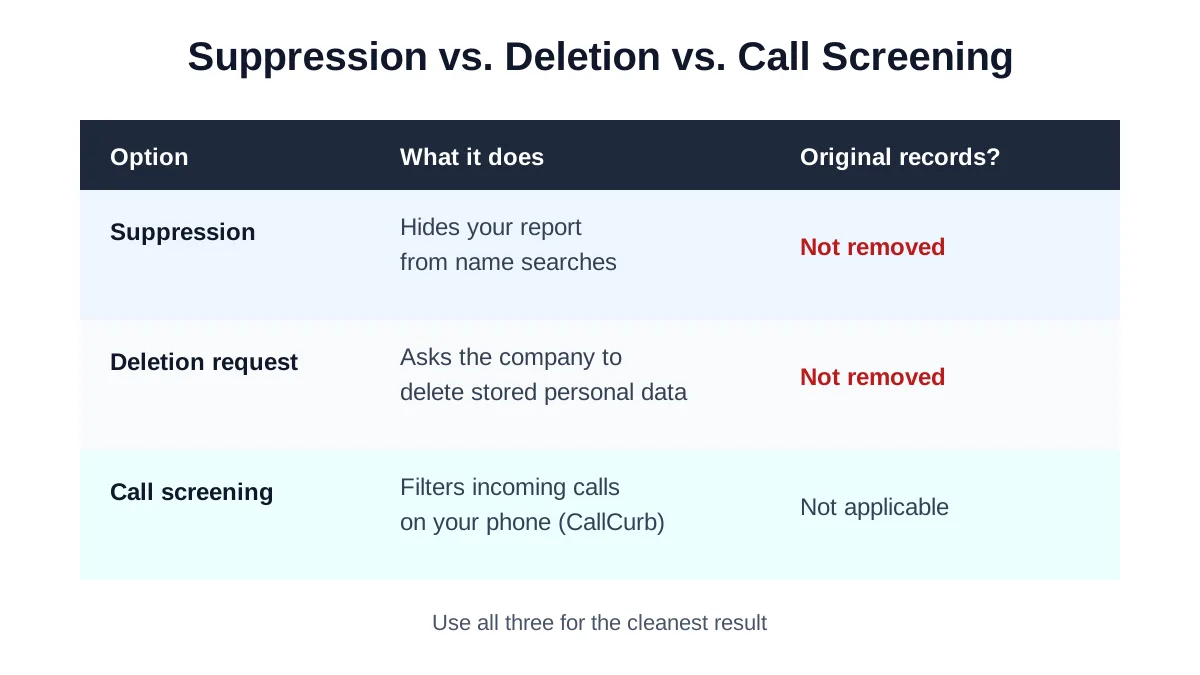
CallCurb screens and blocks calls on your phone. It does not remove your information from credit bureau lists, and it does not opt you out of prescreened offers. Those steps are covered in this guide. CallCurb handles the calls while the other steps take effect.
How to get started
Download CallCurb from the App Store or Google Play. Turn on its protection features, and make sure your personal contacts are saved so that people you know are never blocked. Then let the app handle unknown numbers while you complete the other steps.
Calls from people you actually know
If a loan officer, a bank, or another company you do business with calls from a number you don't have saved, you may need to decide whether to answer. Add the numbers you trust to your contacts, and check your call history periodically so that important calls aren't missed.
How Long It Takes for Loan Calls to Stop
Timing depends on how many lists your number is on and how many of those lists are still active. A practical timeline looks like this:
- Day 0: Submit the OptOutPrescreen request, register with the Do Not Call Registry, set up call screening, and start your call log
- Days 1 to 7: Notice fewer calls from unknown numbers, and log anything that still gets through
- Weeks 2 to 4: Prescreened offers should begin to slow as opt-outs take effect
- Months 2 to 3: Remaining calls are usually from older lists, lead generators, or scammers, and screening plus reporting handles most of them
If calls continue from the same company after you've asked them to stop, your documentation becomes important. The more specific your log, the stronger your complaint.
How to Recognize a Loan Scam Call
Legitimate lenders rarely pressure you to decide during an unsolicited call. Watch for these warning signs.
- Upfront fees. A legitimate lender doesn't typically require payment before a loan is approved, especially by gift card, wire transfer, prepaid card, or cryptocurrency.
- Requests for sensitive information. Be cautious about being asked for your Social Security number, bank login, or full account numbers during an unsolicited call.
- Guaranteed approval. Anyone who promises approval regardless of your credit history is a warning sign.
- Urgency and pressure. Phrases like "decision required today" or "offer expires in an hour" are classic pressure tactics.
- No clear identity. Legitimate lenders identify themselves, their company, and their licensing information clearly.
- Claims about loans you never applied for. If someone says you've been approved for a loan you didn't request, treat it as suspicious.
If you're unsure, hang up. Then contact the company using a phone number from its official website or your own records, not the number that called you.
What to Do If You Already Responded to a Scam
Many people answer a scam call before realizing what it is. If that happened to you, you can still limit the damage.
If you shared a bank or card number
Contact your bank or card issuer right away. Ask them to monitor the account, freeze or replace the card if needed, and reverse any unauthorized charges. Act quickly, since many card protections depend on timely reporting.
If you shared your Social Security number
Place a fraud alert or a credit freeze with the three major credit bureaus. You can request a free credit report at annualcreditreport.com, which is the official site for free credit reports, and check it for accounts or inquiries you don't recognize.
If you paid a fee
Contact the company you paid and your payment provider, and report the incident to the FTC at ReportFraud.ftc.gov. For gift card payments, notify the card issuer as soon as possible, since recovery is often difficult but reporting still helps.
If you feel pressured or threatened
Stop communicating with the caller. Scammers sometimes return with new names and new stories. Save any messages or voicemails, and report them.
How to Handle a Loan Call You Actually Want
Sometimes a loan call is legitimate, and you may want to talk to the lender. If you're comparing loans on your own terms, use these guidelines.
- Start the conversation yourself when possible, by contacting a lender whose website and contact information you've verified
- Check the company through its official site, its state licensing records, and the Consumer Financial Protection Bureau's consumer resources at consumerfinance.gov
- Compare offers in writing before you share sensitive information
- Hold your Social Security number until you've confirmed you're dealing with a legitimate lender and have a clear reason to share it
The goal is to stay in control. You can choose a lender you've researched while still turning down calls you never asked for.
Frequently Asked Questions
How do I stop spam calls from loan companies?
Opt out of prescreened offers at OptOutPrescreen.com, register your number on the National Do Not Call Registry, ask any legitimate lender to stop calling and document the request, report scam calls to the FTC at ReportFraud.ftc.gov, and use a call-screening app such as CallCurb to block the calls that still arrive.
Why did loan companies start calling me?
The most common cause is a credit check or loan application that made your information available for prescreened offers. Lead generators can also sell your number after you submit a form on a comparison, survey, or quote website.
Can I stop loan companies from calling me after I apply for a loan?
Yes. Ask the lender to stop calling you, and register your number on the Do Not Call Registry. A lender you applied with can still contact you about that application, so be specific about what you want stopped, such as marketing calls about other products.
How do I get a lender to stop calling me?
Tell the company directly that you want your number removed from its calling list, ask for confirmation, and note the date and what was said. If the calls continue, file a complaint with the FTC and keep your records.
Does the Do Not Call Registry stop loan calls?
It helps with legitimate telemarketers, but it doesn't stop scammers, who often ignore it. Use the registry alongside opt-outs, reporting, and call screening.
Is OptOutPrescreen really free?
Yes. The official opt-out at OptOutPrescreen.com doesn't charge a fee. Be cautious of any company that charges you to submit the opt-out on your behalf.
How long does an opt-out take to work?
Processing can take several weeks, and some older lists may still be in circulation for a while. A permanent opt-out lasts longer than the five-year option, which requires renewal.
What if the caller is a scammer pretending to be a lender?
Don't share any information or pay any fee. Hang up, block the number, and report it to the FTC at ReportFraud.ftc.gov. If you already shared financial information, follow the steps in the scam section of this guide and contact your bank.
Can call screening block calls from a loan company I already work with?
Call screening can help with unknown numbers and spam, and you can usually add trusted contacts to your allow list. Check your app settings so legitimate calls from businesses you know are not blocked.
Do loan calls mean my credit has been damaged?
Not necessarily. Receiving prescreened offers doesn't mean your credit has been harmed. It usually means your information was included in a list. If you're concerned about accuracy or unfamiliar activity, check your reports at annualcreditreport.com.
Are loan calls connected to insurance calls?
Sometimes. The same types of lead lists can be used by insurance marketers and other telemarketers. If you're also getting insurance pitches, read how to stop insurance spam calls. If the calls are specifically about auto coverage, see how to stop car insurance spam calls.
What if the calls are about Medicare instead?
Medicare-related calls follow different rules and often need different responses. Real Medicare doesn't cold-call people to sell plans, so unsolicited Medicare pitches deserve extra caution. Our guide on how to block Medicare calls in 2026 explains how to tell real from fake and what to do about each.
Should I change my phone number?
Usually no. A new number can end up on the same lists within months, and changing numbers creates disruption. Opt-outs, registry registration, reporting, and call screening are more effective for most people.
Is it safe to answer a call to tell them to stop?
Answering can confirm that your number is active, which some callers use to decide whether to keep calling. A safer approach is to let unknown calls go to voicemail, then return a call only to a number you've verified.
Does CallCurb remove my information from loan lists?
No. CallCurb is a call-screening app. It screens and blocks calls on your phone. Removing your information from prescreened lists requires the OptOutPrescreen process described above.
Related Guides
Loan calls are one type of unwanted call, and many people deal with several at once. These guides may help you cover the rest:
- How to block Medicare calls in 2026 covers Medicare plan pitches and scam calls
- How to stop insurance spam calls covers general insurance marketing
- How to stop car insurance spam calls focuses on auto insurance pitches
The Bottom Line
Spam calls from loan companies usually start with a credit check or application, and they continue because lists are bought, sold, and reused. You can reduce them by opting out of prescreened offers at OptOutPrescreen.com, registering on the National Do Not Call Registry, asking legitimate lenders to stop calling, reporting scams to the FTC, and screening calls with CallCurb.
Start today with the opt-out and the registry, which take about 15 minutes combined. Then let call screening handle the calls that arrive while the rest of the process takes effect, and keep your call log so you can act quickly if something changes.